Solar installers · ROI SolarStrike
How much will each solar panel make? A per-panel method installers can show the homeowner
"This roof makes about X kilowatts" is the number the next installer picks apart. A per-panel number is harder to argue with, because every input is on a datasheet or a map. Here's the method, and how ROI SolarStrike does it on the roof itself.
Start with the panel, not the roof
Every panel model has a datasheet. Three numbers on it matter for output:
- Rated watts (for example, 400 W), measured under standard test conditions.
- Temperature coefficient of power: how much output drops for each degree the cells run above 25 °C. Panels on a hot roof make less than their rating.
- First-year degradation and the yearly fade after it: how much the panel loses as it ages.
The basic yearly estimate
A starting estimate for one panel:
yearly kWh ≈ rated kW × peak sun hours per day × 365
Worked example: a 400 W panel is 0.4 kW. At a site that gets 4.5 peak sun hours a day, 0.4 × 4.5 × 365 = 657 kWh a year, before losses. Use the real sun-hour figure for the address, not a regional average.
Then adjust for what that panel actually faces:
- Tilt and direction. A panel on a north-facing or shallow face makes less than one on a south-facing face at a good tilt. Each roof face gets its own factor.
- Heat. Apply the temperature coefficient for how hot the panel runs.
- Shade. A tree that shades a panel for part of the day takes that panel's output down, and only that panel's.
- Fade. Year 2 is lower than year 1, and so on for the life of the system.
Value the power two ways
Power used in the house is worth the retail rate the homeowner would otherwise pay. Power sent back to the grid is often credited at a different export rate. Rates differ by utility and change over time, so use the customer's actual rates, and show the two separately. Lumping them together overstates savings when the export rate is lower.
Show it on one screen
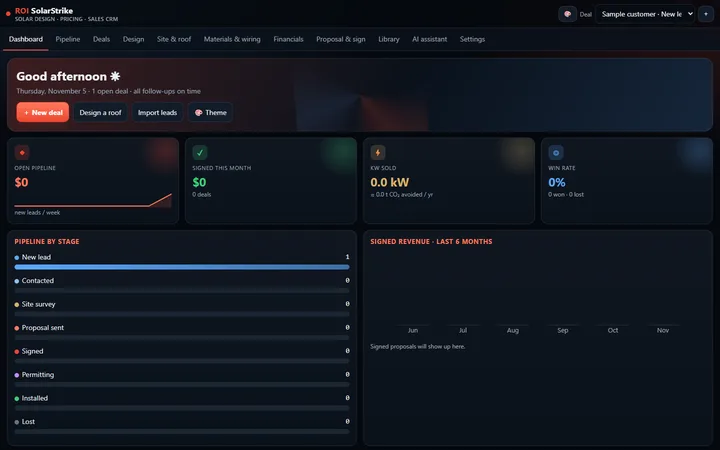
ROI SolarStrike does this panel by panel. Pick the real panel model and it lands on the aerial photo at its datasheet size, so you see what fits on each roof face. Each panel's yearly kilowatt-hours come from its own watts, heat rating and first-year fade, times sun hours and that face's tilt and direction, with per-panel shade from the sun's path. Used and exported power are each valued at their own rate over 25 years, with IRR, NPV and payback shown as estimates.
Draw the conduit run on the map and every strap, coupling and foot of wire is priced with your racking, inverters, breakers and labor. When the homeowner asks "how do you know?", the answer is on one screen instead of three files.
Price: $120 for 30 days or $1,200 for a year, one payment, no automatic renewal, one key for every user and device at your business. Try the 7-day demo free.